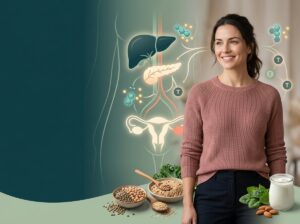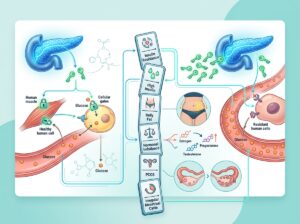
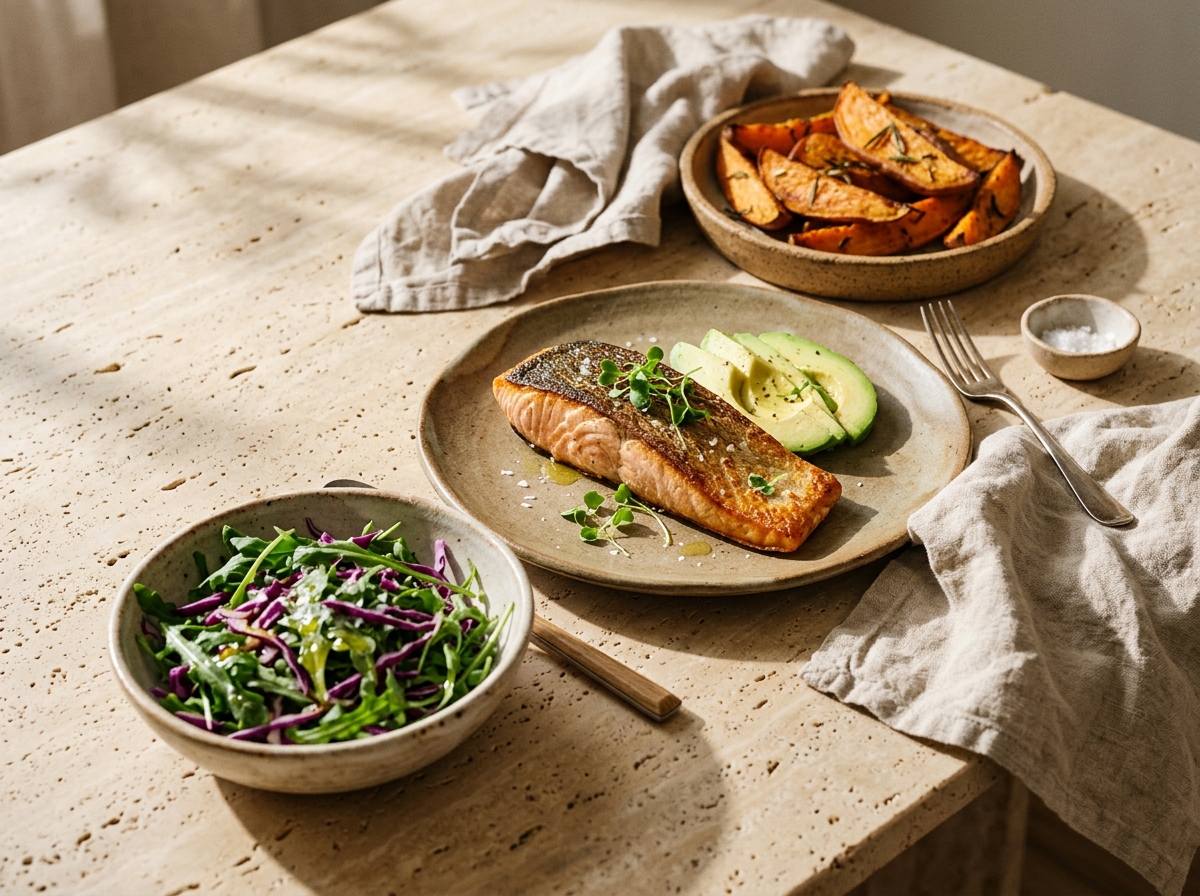
How a simple dietary sequence buffers postprandial glucose surges, blunts reactive hyperinsulinemia, and mitigates ovarian androgen synthesis.
The Endocrinology of Food Sequencing
For women navigating Polycystic Ovary Syndrome (PCOS), mainstream guidance frequently pushes unsustainable restriction: severe carbohydrate elimination or hyper-vigilant caloric tracking. However, clinical endocrinology confirms that the physical sequence in which macronutrients enter the digestive tract exerts a profound influence on metabolic response—independent of total carbohydrate quantity.
Over 70% of individuals with PCOS present with underlying insulin resistance .When carbohydrates are digested first, rapid enzymatic hydrolysis produces a precipitous rise in circulating glucose. In response, the pancreatic β-cells oversecrete insulin. This hyper insulinemic state directly stimulates ovarian theca cells to overproduce free testosterone and androgens, fueling hirsutism, cystic breakouts, and anovulation.
The Biophysical Fiber Mesh Mechanism
Consuming viscous and soluble fiber 5 to 10 minutes prior to proteins, fats, and starches initiates a transformative metabolic cascade:
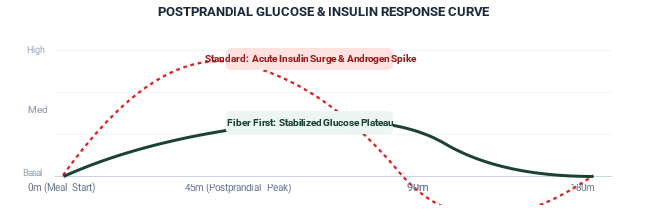
Postprandial Glucose & Insulin Response Curve
- Standard Meal: Acute Insulin Surge & Androgen Spike
- Fiber First: Stabilized Glucose Plateau
- Timeline: 0m (Meal Start) → 45m (Postprandial Peak) → 90m → 180m
Endocrine Insight: Gastric Emptying & GLP-1 Secretion
Soluble fiber swells into a viscous gel lining the mucosal epithelium of the small intestine. This delayed gastric emptying significantly impedes α-amylase accessibility to starches, leading to a sustained release of gut satiety peptides (GLP-1 and PYY) while suppressing ghrelin.
Core Clinical Benefits for PCOS
| Benefit Area | Physiological Mechanism | Symptom Target |
|---|---|---|
| Glucose Attenuation | Inhibition of intestinal glucose diffusion rate; lower AUC post-meal. | Reduces afternoon energy crashes, brain fog, and chronic fatigue. |
| Androgen Suppression | Dampened hyperinsulinemia prevents theca-cell testosterone hypersecretion. | Supports remediation of hirsutism, jawline cystic acne, and androgenic alopecia. |
| Incretin Signaling | Mechanical distension of the ileum stimulates early endogenous GLP-1 and PYY release. | Eliminates intense carbohydrate cravings and supports effortless satiety. |
| Hormone Clearance | Insoluble fiber physically binds metabolized estrogens in the bowel, preventing reabsorption. | Buffers against estrogen dominance and irregular, heavy cycles. |
Best Sources for Pre-Meal Fiber Priming
1. Non-Starchy Greens
- Cruciferous slaw (cabbage, kale)
- Cucumber & celery with olive oil
- Steamed broccoli florets
- Dressed bitter greens (arugula)
2. Mucilaginous Seeds
- 1 tbsp ground flax in 150ml water
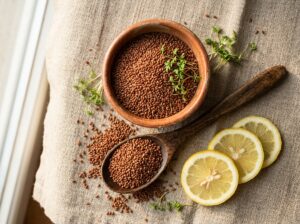
- Hydrated whole chia seeds (or halim / garden cress seeds)
- Psyllium husk fiber preloads
- Sprouted pumpkin seeds
3. Sprouted Legumes
- Lightly steamed edamame pods
- Sprouted mung bean salad
- 2–3 tbsp chilled lentil starter
- Green pea & mint side bowl
The 3-Step Meal Order Protocol
STEP 1: Fiber Mesh Starter (5–10 Minutes Before Main Plate)
Consume 5–8g of fiber from raw/steamed non-starchy vegetables or seed preparations with an acid (apple cider vinegar or lemon juice) to further blunt glucose uptake.
STEP 2: Proteins & Essential Lipids
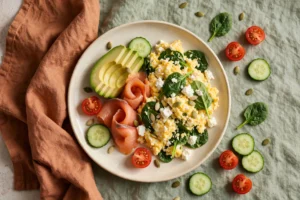
Eat your primary protein source (wild fish, pasture-raised poultry, organic tofu, eggs) combined with healthy fats (avocado, extra virgin olive oil). This reinforces sustained cholecystokinin (CCK) release.
Keep Reading
- Insulin Resistance and PCOS: Why Calorie Cutting Fails
- Halim Seeds for PCOS: Benefits for Hormones and Iron
STEP 3: Complex Carbohydrates & Starches Last
Enjoy complex whole carbohydrates (quinoa, sweet potatoes, wild rice, lentils). Because the intestinal fiber matrix is already active, carbohydrate digestion is slow, steady, and metabolically protective.
Clinical Takeaway
You do not need to deprive your body of carbohydrates to manage PCOS effectively. By sequencing your plate—fiber first, protein second, starches last—you convert every meal into an endocrine buffer that regulates blood sugar, curbs cravings, and supports ovulation.