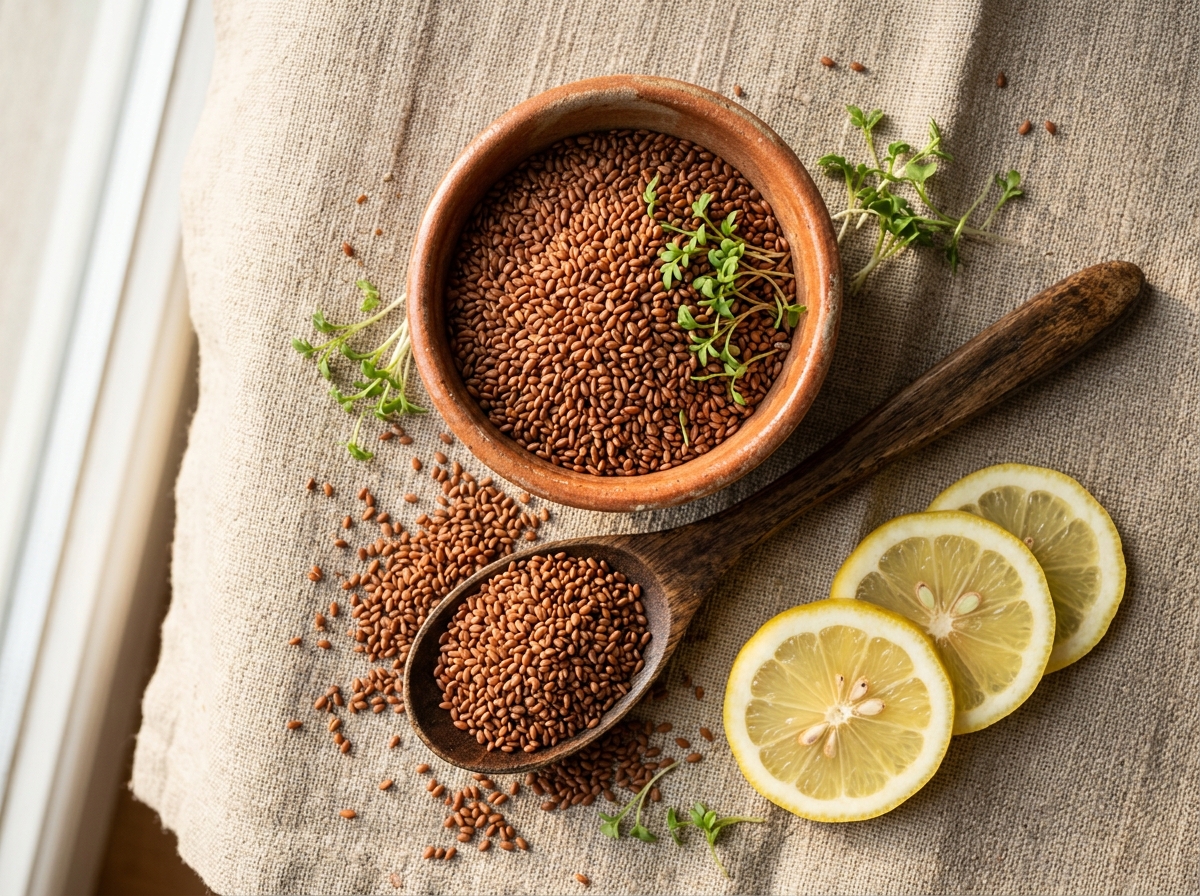
Salim seeds—widely categorized in botanical and nutritional literature as Garden Cress seeds (Lepidium sativum L.), and regionally designated as Halim Seeds or Aliv seeds—represent a nutrient-dense powerhouse belonging to the Brassicaceae (mustard) family. Indigenous to Southwest Asia and Mediterranean regions, these small reddish-brown seeds exhibit a distinct peppery pungency attributable to endogenous glucosinolates.
Modern clinical biochemistry and nutraceutical evaluations have established L. sativum as a potent functional food capable of addressing micronutrient deficiencies, systemic inflammation, metabolic dysregulation, and complex endocrine anomalies such as PCOS and irregular cycles.
1. Quantitative Nutritional & Biochemical Profile
Lepidium sativum seeds demonstrate exceptional macronutrient density and bioavailable micronutrient concentrations per unit mass. A standardized single tablespoon serving (~12 grams) provides:
| Nutrient / Bioactive | Value (~12 g serving) | Primary Biochemical & Physiological Role |
|---|---|---|
| Metabolizable Energy | ~50–55 kcal | High-density caloric replenishment & cellular ATP synthesis |
| Crude Protein | ~3.0 g (25% w/w) | Substrate for enzyme synthesis, tissue repair & peptide hormones |
| Dietary Fiber (Mucilage) | ~1.0–1.5 g | Modulation of gastric emptying & short-chain fatty acid generation |
| Lipids (ALA Omega-3 & 6) | ~3.0 g | Precursors to anti-inflammatory eicosanoids & cellular membrane fluidity |
| Elemental Iron (Fe) | ~8.0–12.0 mg | Essential cofactor for hemoglobin synthesis, myoglobin & cellular energy |
| Calcium (Ca) | ~35–45 mg | Hydroxyapatite bone mineralization & intracellular signaling |
| Folate (Vitamin B9) | Moderate | One-carbon transfer metabolism, DNA methylation & red blood cell formation |
| Tocopherols & Vitamin C | Trace to Moderate | Scavenging reactive oxygen species (ROS) & systemic cellular protection |
2. Clinical Efficacy in Pathological States
Iron Deficiency Anemia & Hematopoiesis
Lepidium sativum is an exceptionally concentrated botanical source of non-heme iron. Regular administration stimulates erythropoiesis, significantly elevating serum ferritin and hemoglobin concentrations. It offers an efficacious, highly bioavailable non-synthetic nutritional intervention for hypochromic microcytic anemia, particularly in adolescent females and women experiencing heavy menstrual bleeding.
Protein-Energy Malnutrition & Muscle Health
Exhibiting approximately 25% protein content by dry weight with a favorable essential amino acid profile, L. sativum serves as a dense caloric and macronutrient supplement. It facilitates rapid nitrogen retention and positive nitrogen balance in undernourished individuals, convalescent patients, and active recovery regimens.
Postpartum Convalescence & Galactagogue Action
Traditionally formulated as lipid-bound maternal preparations (Aliv kheer or laddoos), garden cress seeds stimulate prolactin secretion via neuroendocrine pathways. This enhances breast milk volume while concurrently replenishing depleted maternal iron and calcium reserves postpartum.
Skeletal Homeostasis & Bone Density
The synergistic presence of calcium, magnesium, phosphorus, and vitamin K maintains osteoblast activity and supports bone mineral density (BMD), helping attenuate the progression of osteopenia and postmenopausal bone loss.
Glycemic Regulation & Carbohydrate Kinetics
The complex arabinogalactan and glucomannan mucilage in the seed coat forms a high-viscosity hydrocolloid gel matrix in the digestive tract. This slows carbohydrate breakdown and glucose diffusion, effectively blunting postprandial blood sugar spikes in insulin-resistant and type 2 diabetic profiles.
Gastrointestinal Motility & Colonic Clearance
Upon hydration, the mucilaginous outer layer acts as a hydrophilic bulk-forming agent. It softens stool consistency, lubricates the mucosal barrier, and promotes physiological peristalsis without provoking gastrointestinal irritation.
3. Endocrine Modulation: PCOS, PMS, and Cycle Irregularities
For individuals navigating female hormonal imbalances, L. sativum offers targeted biochemical support across three primary pathways:
- Phytoestrogenic Stimulation for Amenorrhea: L. sativum contains active phytoestrogenic polyphenols (lignans and isoflavonoids) structurally analogous to endogenous 17β-estradiol. In states of hypothalamic or ovulatory amenorrhea (missing periods), these bioactives bind competitively to estrogen receptors (ERα and ERβ), inducing mild estrogenic signaling essential for endometrial priming and menstrual resumption.
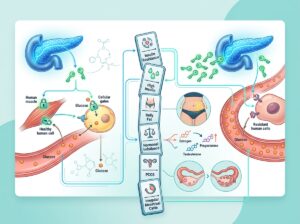
- PCOS & Hyperandrogenism Control: Hyperinsulinemia triggers excessive ovarian theca-cell androgen synthesis (excess testosterone) and lowers sex hormone-binding globulin (SHBG). The soluble fiber matrix of garden cress seeds improves peripheral insulin sensitivity, subsequently reducing serum insulin spikes and systemic ovarian androgen production.
- PMS & Dysmenorrhea Relief: High concentrations of bioavailable magnesium and alpha-linolenic acid (ALA) downregulate cyclooxygenase-mediated synthesis of pro-inflammatory prostaglandins (PGE2), relieving severe menstrual cramps and pelvic pain. Concurrently, folate and B-vitamin cofactors facilitate neurotransmitter synthesis (serotonin and dopamine) to ease luteal mood swings.
4. Phase-Specific Menstrual Cycle Administration
To maximize endocrine outcomes, garden cress seeds can be cycle-synced according to your cycle phase:
| Menstrual Phase | Physiological Objective | Clinical Protocol |
|---|---|---|
| Follicular Phase (Days 1 to 14) | Replenish iron lost during menses; support estrogenic priming for follicle development and endometrial lining. | 1 tsp (~5 g) soaked seeds daily in the morning, paired with vitamin C (lemon water or citrus) to maximize iron absorption. |
| Luteal Phase (Days 15 to 28) | Reduce inflammatory prostaglandins, relieve uterine cramping, and stabilize luteal blood sugar. | ½ to 1 tsp seeds 3–4 evenings per week in warm almond or dairy milk with a pinch of turmeric. (Restrict if severe estrogen dominance is present). |
| Amenorrhea Protocol (Absent Cycle) | Sustained phytoestrogenic induction to stimulate endometrial lining and trigger menstruation. | 1 tsp daily for 10–14 consecutive days until bleeding initiates; pause during active flow, then resume the follicular schedule. |
5. Preparation & Consumption Protocols
Because garden cress seeds develop a gel coat rapidly and contain active enzymes, proper preparation improves both nutrient bioavailability and digestive tolerance:
- Hydrated Gel (Best for Daily Use & Iron Absorption): Soak 1 teaspoon of seeds in ½ cup of room-temperature water or fresh lemon water for 30–45 minutes. The seeds will swell and form a gelatinous outer layer. Consume directly on an empty stomach.
- Nutrient-Dense Warm Tonic (Best for Cramps & Sleep): Simmer 1 teaspoon of soaked seeds in 1 cup of warm milk (dairy or plant-based) with a pinch of turmeric, crushed cardamom, and a small drop of ghee or raw honey.
- Dry-Roasted Powder (Best for Smoothies & Salads): Lightly dry-roast whole seeds on low heat for 2–3 minutes to deactivate excess moisture and reduce bitterness. Coarsely grind and sprinkle over salads, soups, or yogurts.
6. Pharmacological Safety, Toxicology & Contraindications
| Parameter | Clinical Directives & Precautions |
|---|---|
| Standard Dosage | 1 teaspoon to 1 tablespoon (5–12 g) daily. Begin with ½ teaspoon (2.5 g) for the first week to assess individual gut tolerance. |
| Pregnancy Warning | Strictly contraindicated in medicinal doses during pregnancy. L. sativum exhibits documented oxytocic and emmenagogic properties that can stimulate uterine contractions. |
| Thyroid Interactions | Contains glucosinolate-derived thiocyanates (mildly goitrogenic). Individuals with primary hypothyroidism should cook or roast the seeds thoroughly and avoid continuous excessive intake. |
| Medication Interactions | Exhibits mild intrinsic diuretic and blood-sugar-lowering effects. Monitor levels if concurrently taking antihypertensives, diuretics, or diabetic medications. |
D I E T . G L O W . R E P E A T