If you are dealing with Polycystic Ovary Syndrome (PCOS), you have likely heard the standard advice:
“Just eat less and move more.”
Yet, despite cutting portions, skipping meals, or trying extreme low-calorie diets, the scale barely budges. Irregular cycles, unexpected weight retention around the midsection, stubborn acne, or unwanted hair growth may still persist.
The problem isn’t a lack of willpower. It is a biological hurdle called insulin resistance.
Here is a simple look at the biochemical link between insulin, male hormones (androgens), and weight retention—along with why a low-Glycemic Index (low-GI) balanced approach works far better than severe calorie restriction.
1. What Is Insulin Resistance?
When you eat foods containing carbohydrates—such as rice, roti, bread, fruits, or sweets—your digestive system breaks them down into glucose (sugar), which enters your bloodstream.
In response, your pancreas releases insulin, a key hormone that acts like a key. It unlocks your body’s cells so glucose can enter and be used for energy.

In insulin resistance, the cell “locks” become rusty. Your cells don’t respond efficiently to normal levels of insulin, leaving glucose in the bloodstream. To compensate, your pancreas pumps out even higher levels of insulin to force the sugar into the cells.
This leads to a state of hyperinsulinemia—persistently high levels of circulating insulin in your blood.
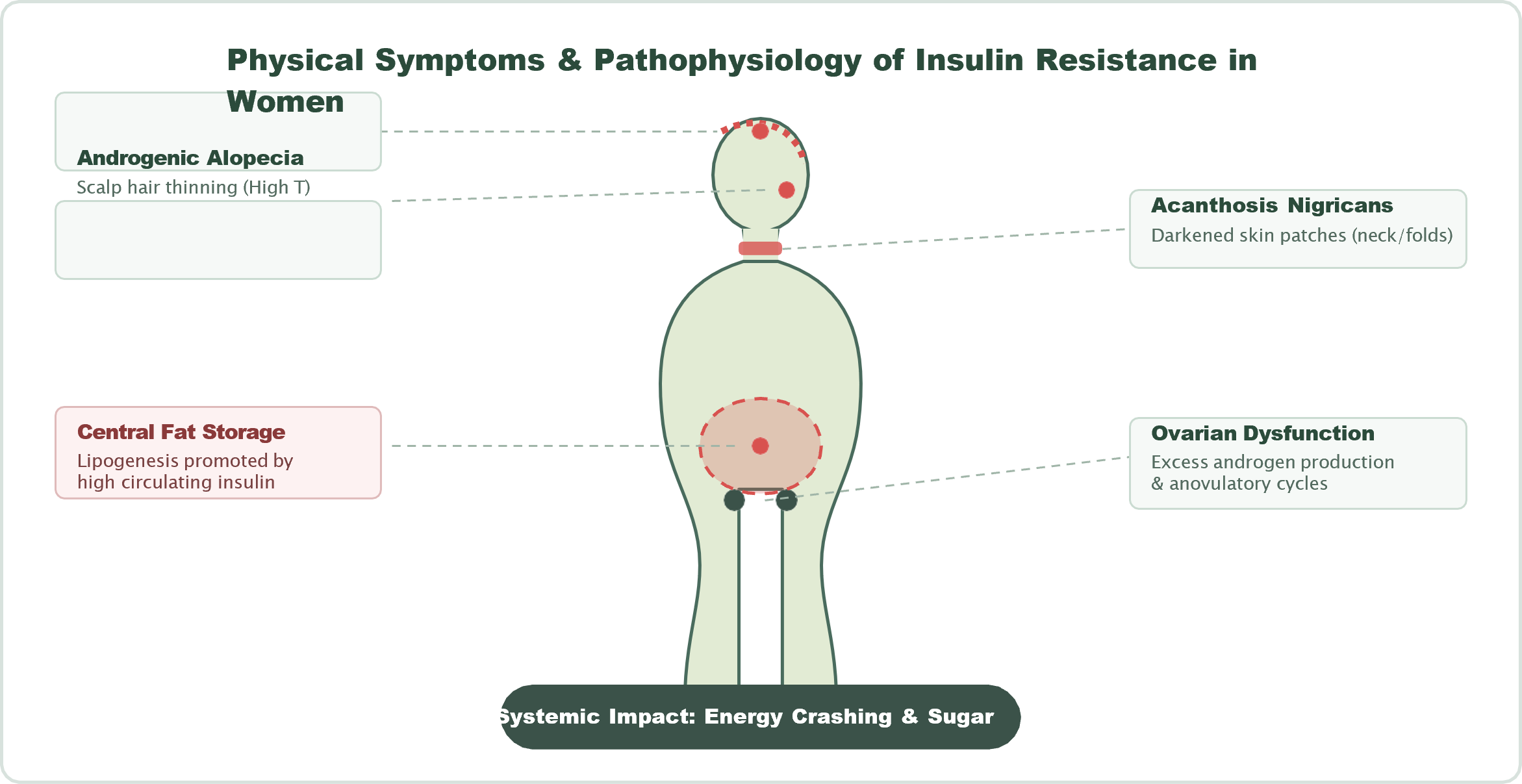
Figure 1: Manifestation and anatomical impact of Insulin Resistance in the female body.
2. The Biochemical Chain Reaction: Insulin, Androgens, and Weight
High circulating insulin acts as a master trigger for hormonal imbalances, particularly in women with PCOS.
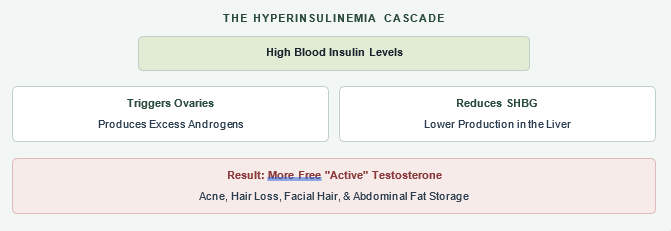
Step 1: Insulin Tells the Ovaries to Make Testosterone
The ovaries contain specialized cells called theca cells, which naturally produce small amounts of total androgens (male hormones like testosterone). Insulin acts directly on these theca cells. When insulin levels are elevated, it stimulates the ovaries to overproduce testosterone.
Step 2: Insulin Blockades the Liver’s Protective Protein
Normally, your liver produces a protein called Sex Hormone-Binding Globulin (SHBG). Think of SHBG as a sponge that mops up excess testosterone in the blood so it cannot cause symptoms. High insulin signals the liver to produce less SHBG.
With less SHBG available, more testosterone floats freely in your bloodstream, triggering classic symptoms like:
- Facial hair growth (hirsutism)
- Hormonal acne along the jawline and chin
- Scalp hair thinning
- Disrupted ovulation and irregular periods
Step 3: Insulin Locks Fat in Storage
Insulin is an anabolic, energy-storing hormone. One of its primary jobs is to inhibit lipolysis (the breakdown of stored body fat) and promote lipogenesis (the creation and storage of fat). High insulin levels signal to your body that energy is abundant, keeping fat locked inside adipose tissue—especially around the abdomen—making weight loss difficult even on lower calories.
3. Why Severe Calorie Restriction Backfires in PCOS
When weight loss stalls, the natural instinct is to drastically cut calories or skip meals. However, severe restriction can backfire due to two main mechanisms:
The Cortisol Stress Connection
Drastic calorie cuts signal a state of starvation to your body, raising the stress hormone cortisol. Cortisol prompts the liver to release stored glucose into the bloodstream via a process called gluconeogenesis. This sudden rise in blood sugar triggers another surge of insulin, continuing the cycle you are trying to break.

Metabolic Adaptation
Eating too few calories for extended periods causes your resting metabolic rate (RMR) to slow down to conserve energy. This can lead to fatigue, intense sugar cravings, and rapid weight regain as soon as standard eating habits resume.
4. The Low-GI Solution: Working With Your Metabolism
Instead of focusing solely on calorie reduction, focusing on carbohydrate quality helps keep insulin levels stable.
The Glycemic Index (GI) measures how quickly a carbohydrate-containing food raises blood sugar levels on a scale from 0 to 100.
|
Carbohydrate Type |
Glycemic Index | Blood Sugar Impact |
Insulin Response |
| High GI (e.g., white flour, sugary drinks, pastries) | High (70+) | Rapid spike | Large insulin surge |
| Low GI (e.g., lentils, whole grains, non-starchy veggies) | Low (55 or less) |
Slow, steady rise |
Small, manageable insulin release |
By choosing low-GI carbohydrates, blood glucose rises gradually, preventing sharp spikes and reducing the need for large insulin surges. Keeping insulin levels lower and steady over time helps signal the ovaries to reduce androgen production while making it easier for the body to access stored fat for fuel.
5. Practical Low-GI Meal Building
Managing insulin levels does not require eliminating carbohydrates entirely or avoiding traditional meals. Simple adjustments can help balance blood sugar effectively.
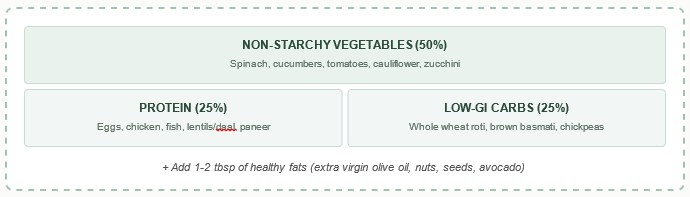
The Low-GI Plate Rule
Aim to build your meals with balanced proportions:
Simple Everyday Food Swaps
- Swap refined grains for complex grains: Choose whole-grain options or brown basmati rice over refined white flour (maida) or processed white rice.
- Pair carbs with protein or healthy fats: Avoid eating carbohydrates Combining a fruit or low-GI grain with a source of protein or healthy fat (like almonds, walnuts, or Greek yogurt) helps slow down digestion and steady blood sugar absorption.
- Incorporate pulses and legumes: Beans, chickpeas (chana), and lentils (daal) are naturally rich in fiber and protein, making them low-GI choices that support steady energy
D I E T . G L O W . R E P E A T
REVIEWED BY:
Muhammad Asad Ijaz
The founder of the aura diet
WRITTEN BY:
Jawairia Naeem
Biochemist and dietitian