
Polycystic Ovary Syndrome (PCOS) and Polycystic Ovarian Disease (PCOD) are among the most common endocrine and reproductive conditions affecting women of reproductive age. Although the terms are frequently used interchangeably in conversation, they are not the same condition.
Not every irregular period indicates PCOS or PCOD—and understanding the clinical distinction between the two is vital for proper care.
What Is Hormonal Imbalance?
Hormonal imbalances can impact a woman’s mood, energy levels, metabolic rate, and reproductive vitality. A hormonal imbalance occurs when circulating chemical messengers become too elevated or depressed relative to the body’s physiological requirements.
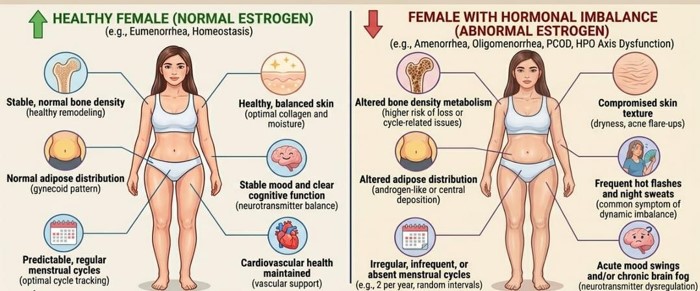
A woman with balanced estrogen levels typically maintains healthy bone mineral density, balanced body composition, stable moods, and manageable cravings. In contrast, when estrogen and its counter-hormone progesterone become dysregulated, three prominent issues tend to arise:
- Unexplained Weight Fluctuations: Difficulty losing weight despite maintaining caloric consistency.
- Affective Instability: Unprovoked mood swings, irritability, and heightened luteal anxiety.
- Intense Glycemic Cravings: Frequent urges for fast-acting refined carbohydrates and sugars.
Bleeding may still occur on a 28-day schedule even when ovulatory dysfunction is present. Having a monthly bleed does not guarantee that your hormones are functioning in harmony. Tracking your cycle alongside systemic symptoms helps verify whether your estrogen, progesterone, and insulin are working together.
Difference Between PCOS and PCOD
While both conditions involve ovarian follicles, their physiological scope is fundamentally different:
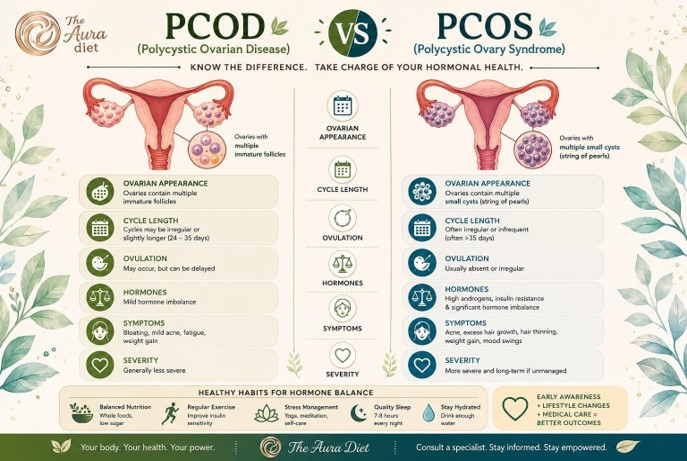
1. PCOD (Polycystic Ovarian Disease)
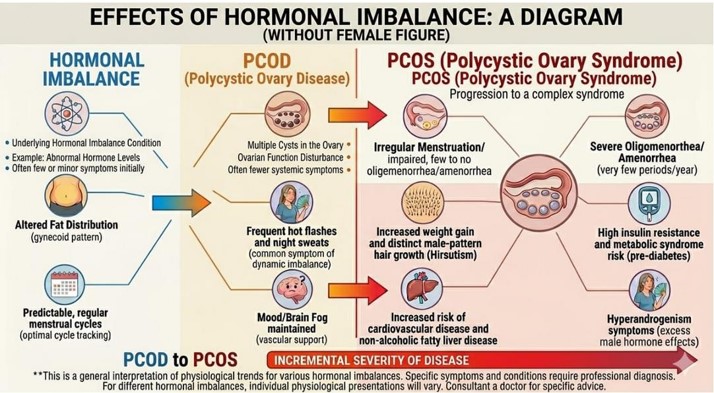
PCOD occurs when hormonal imbalances affect only the ovaries, or isolated to a single ovary. It is clinically regarded as a localized ovarian condition. While ovulation may be irregular or delayed, broader metabolic and systemic functions (such as glucose regulation and lipid metabolism) typically remain within normal ranges.
2. PCOS (Polycystic Ovarian Syndrome)
PCOS occurs when endocrine disruption impacts bilateral ovaries alongside whole-body metabolic architecture. This includes underlying insulin resistance, digestive anomalies, and neuroendocrine axes like thyroid and cortisol. Because it affects multiple organ systems, the clinical designation syndrome is applied.
The Progression: What Happens When Imbalances Are Ignored?
Leaving chronic endocrine disruptions unaddressed can transition a manageable presentation into systemic metabolic challenges over time:
Stage 1: Untreated PCOD
A woman may still bleed regularly every month, yet ovulatory quality remains masked. Over months and years, unmonitored insulin surges and reactive blood sugar fluctuations quietly compound, heightening the risk for prediabetes and metabolic strain.
Stage 2: Progression to Systemic PCOS
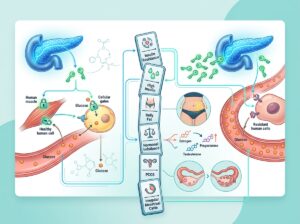
When cellular insulin sensitivity degrades continuously, symptoms expand across multiple organ systems. Hallmark presentations include:
- Accelerated visceral fat storage around the midsection and submental area (double chin)
- Persistent adult cystic acne flares across the jawline, chest, and upper back
- Heart palpitations or rapid fatigue during cardiovascular exertion
- Depressed libido and reduced reproductive vitality
- Oligomenorrhea (cycles extending past 35–45 days) or full amenorrhea
Why Is PCOS Being Renamed to PMOS?
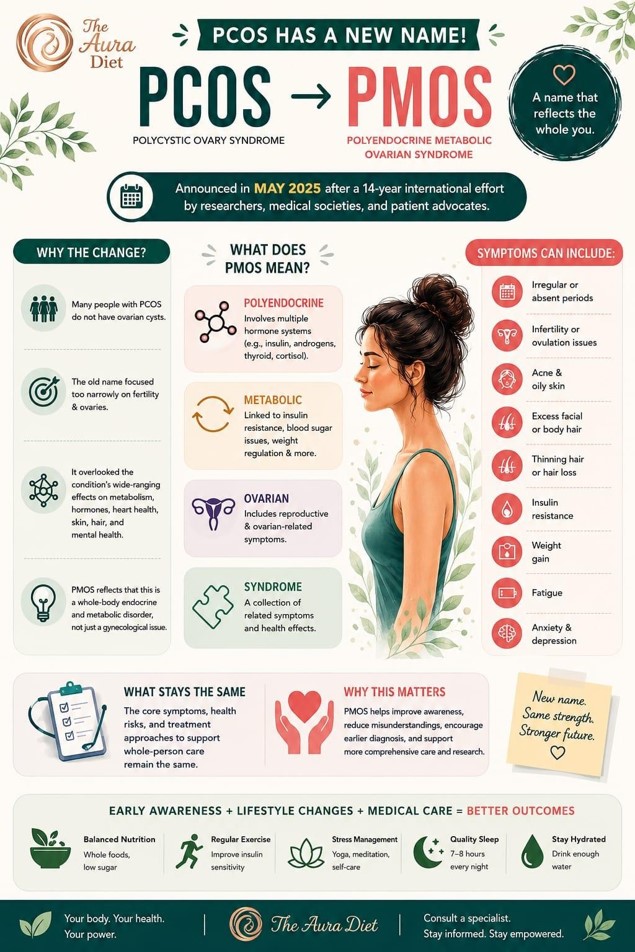
PMOS stands for Polyendocrine Metabolic Ovarian Syndrome. In May 2026, an international consensus panel formally proposed retiring the historical term Polycystic Ovary Syndrome (PCOS) in favor of PMOS at the European Congress of Endocrinology, with findings published in The Lancet.
The update was designed to eliminate the diagnostic blind spots of the old name by emphasizing whole-body metabolic and multi-hormonal involvement rather than viewing it merely as an ovarian condition.
Deconstructing the PMOS Acronym
1. Polyendocrine
Multiple endocrine feedback loops are involved beyond estrogen: insulin regulation, thyroid hormones, adrenal cortisol rhythms, and androgen clearance.
2. Metabolic
Highlights that cellular insulin resistance, lipid dysregulation, and vascular markers are primary clinical drivers, increasing long-term cardiovascular and metabolic risks.
3. Ovarian
Acknowledges that the ovaries are central targets of this systemic signaling—manifesting as anovulation, delayed cycle lengths, and arrested follicular development.
4. Syndrome
Signifies a constellation of clinical presentations that vary significantly by individual phenotype (such as the 4 distinct PCOS types), rather than a singular static disease.
Why the Old Term Needed an Update
- The Word “Cysts” Is Clinically Inaccurate: The structures observed on pelvic ultrasound are not pathological fluid-filled cysts; they are benign, immature egg follicles stalled in development due to hormonal signaling blocks. Many women diagnosed do not present with polycystic morphology at all.
- Over-Focus on Reproductive Anatomy: The old name suggested the condition was purely gynecological. In reality, PMOS involves widespread metabolic regulation, systemic inflammation, neurochemistry, and long-term vitality.
Global Collaboration Behind the Name:
Led by Professor Helena Teede (Monash Centre for Health Research and Implementation), the PMOS framework represents a 14-year international consensus initiative supported by 56 leading medical societies—including the Endocrine Society, ASRM, and ESHRE—alongside over 22,000 healthcare stakeholders across 6 continents.
5 Evidence-Based Tips to Manage PMOS & PCOD
1. Move Your Body Daily
Engage regular skeletal muscle contractions via progressive resistance training, brisk walking, or low-impact movement to drive non-insulin glucose uptake.
2. Choose Balanced, Low-GI Nutrition
Anchor meals in quality proteins, omega-rich lipids, and fiber-forward whole carbohydrates. Practicing pre-meal food sequencing (fiber first) buffers postprandial glucose curves.
3. Prioritize Rest and Circadian Rhythms
Consistent sleep schedules lower nocturnal cortisol surges that otherwise trigger acute insulin resistance and ovulatory disruption the following day.
4. Track Your Cycle Dynamics
Log basal body temperature, cervical mucus, and symptom timelines to confirm genuine ovulatory events rather than anovulatory breakthrough bleeds.
5. Evaluate Comprehensive Lab Biomarkers
Request complete panels including fasting insulin, HOMA-IR, free testosterone, and lipid profiles to tailor clinical interventions directly to your biological root cause.
Need a Personalized PMOS or PCOD Nutrition Plan?
At The Aura Diet, we believe endocrine healing must be sustainable and personalized—with zero extreme restriction, budget-conscious meal design, and evidence-based protocols that fit your lifestyle.
Disclaimer: This article is intended for educational purposes only and should not be considered medical advice. Always consult a qualified gynecologist, endocrinologist, or registered healthcare professional for clinical diagnosis, treatment, and personalized medical guidance.
Keep Reading
- The 4 Types of PCOS: Symptoms, Diagnosis and Diet Plans
- Insulin Resistance and PCOS: Why Calorie Cutting Fails
- Food Sequencing for PCOS: The Science of Eating Fiber First
4a; margin: 0; font-weight: bold; text-align: center;”>D I E T . G L O W . R E P E A T .
Scientific References:
- FemExcel Clinical Endocrinology Blog Archive (femexcel.com)
- MedBound Times: International Consensus on PCOS Renaming to PMOS (medboundtimes.com)
- NewYork-Presbyterian Health Matters: PCOS is Now PMOS: Why the Change Matters (nyp.org)
- University of Rochester Medical Center: Global Clinical Update on PMOS Nomenclature (urmc.rochester.edu)